
A complete guide to prevention, identification, and biological control for clean, chemical-free crops
Introduction: Why Pesticide-Free Matters
Vertical farming promises clean, safe, local food. But pests don’t care about your promises. Aphids, spider mites, fungus gnats, and thrips will find their way into even the most controlled environments.
The good news? You don’t need chemical pesticides to win.
This guide covers a complete Integrated Pest Management (IPM) framework for vertical farms:
- Prevention strategies that stop pests before they start
- Early identification so you catch problems small
- Biological controls that work without chemicals
- A step-by-step action plan for common pests
Part 1: The IPM Framework
What Is Integrated Pest Management?
IPM is a layered approach to pest control that prioritizes prevention, monitoring, and targeted intervention — with chemicals as an absolute last resort (and in vertical farms, ideally never).
The 5 Levels of IPM:
| Level | Strategy | Effort | Effectiveness |
|---|---|---|---|
| 1 | Prevention | High (upfront) | Highest |
| 2 | Monitoring | Medium | High |
| 3 | Identification | Low | Critical |
| 4 | Biological control | Medium | High |
| 5 | Chemical (last resort) | Low | Medium (not needed) |
Why Pesticides Don’t Belong in Vertical Farms
| Reason | Explanation |
|---|---|
| No residue tolerance | Many pesticides aren’t approved for crops consumed raw |
| Customer expectations | Clean, pesticide-free is your value proposition |
| Resistance | Pests develop resistance, requiring stronger chemicals |
| Worker safety | Enclosed spaces concentrate chemical exposure |
| Biological control conflict | Pesticides kill your beneficial insects too |
Part 2: Prevention — Your First Line of Defense
Prevention is 90% of pest control. Get this right, and you’ll rarely deal with outbreaks.
Facility Design
| Measure | Why It Works | Implementation |
|---|---|---|
| Positive air pressure | Keeps unfiltered air from entering | Exhaust less air than you bring in |
| Air filtration | Removes pest particles from incoming air | MERV 13+ filters on all intakes |
| Double-door entry | Prevents pests from flying/walking in | Vestibule or airlock at entrance |
| Sealed seams | Eliminates hiding spots | Caulk gaps, seal around pipes |
| Screen all vents | Blocks flying insects | 150-200 micron mesh |
Sanitation Protocols
| Practice | Frequency | Why |
|---|---|---|
| Clean all surfaces | Daily | Removes algae and debris that harbor pests |
| Remove dead plant material | Daily | Decaying leaves attract fungus gnats |
| Disinfect between crops | Between cycles | Breaks pest life cycles |
| Keep floors dry | Daily | Wet floors attract fungus gnats |
| No outside plants | Always | Outside plants introduce pests |
| Change clothes/shoes | Daily entry | Prevents tracking pests in |
Quarantine Protocol
Any new plant material entering your farm is a potential pest carrier.
Quarantine procedure:
- Isolate new plants in a separate area for 7-10 days
- Inspect daily for any signs of pests
- Only move to main growing area after clean inspection
- Better yet: start all plants from seed in-house
Environmental Controls
| Parameter | Pest Prevention Benefit |
|---|---|
| Temperature | Cooler temps slow pest reproduction |
| Humidity | Low humidity (50-60%) discourages many pests |
| Air circulation | Stagnant air allows pest establishment |
| Light spectrum | Some evidence that UV light deters pests |
Part 3: Common Pests — Identification Guide
Aphids
Appearance:
- Small (1-4mm), pear-shaped
- Green, black, yellow, or white
- Usually found on new growth and undersides of leaves
Signs of infestation:
- Sticky honeydew on leaves
- Sooty mold (black fungus on honeydew)
- Curled, distorted leaves
- Visible clusters of insects
Damage:
- Suck plant sap
- Transmit plant viruses
- Weaken plants, reduce yield
Favorite crops: All leafy greens, herbs, peppers
Spider Mites
Appearance:
- Very tiny (0.5mm) — barely visible
- Red, brown, or two-spotted
- Need magnifying glass to see clearly
Signs of infestation:
- Fine webbing on leaves (first sign)
- Stippled (tiny yellow/white dots) on leaf surface
- Leaves turn bronze or yellow
- Webbing between leaves and stems
Damage:
- Puncture leaf cells and suck contents
- Reduce photosynthesis
- Can kill plants in severe infestations
Favorite crops: Basil, tomatoes, cucumbers, strawberries
Fungus Gnats
Appearance:
- Small (2-5mm), mosquito-like
- Dark gray or black
- Slow-flying around soil/medium surface
Signs of infestation:
- Tiny black flies on medium surface
- Larvae in growing medium (translucent with black heads)
- Sudden seedling death
- Weak, stunted growth
Damage:
- Larvae feed on roots
- Damage allows root rot pathogens to enter
- Adults are mostly nuisance (but reproduce quickly)
Favorite crops: Seedlings, any crop in moist medium
Thrips
Appearance:
- Very tiny (1-2mm), slender
- Yellow, brown, or black
- Fast-moving
Signs of infestation:
- Silvery streaks on leaves
- Black specks (fecal matter)
- Distorted new growth
- Flower damage (on fruiting crops)
Damage:
- Scrape leaf surface and suck cell contents
- Transmit viruses (especially to tomatoes)
- Reduce leaf quality and yield
Favorite crops: Onions, peppers, tomatoes, leafy greens
Whiteflies
Appearance:
- Tiny (1-2mm), moth-like
- White, powdery wings
- Fly up in cloud when disturbed
Signs of infestation:
- Cloud of white insects when leaves touched
- Yellowing leaves
- Sticky honeydew on leaves
- Sooty mold
Damage:
- Suck plant sap
- Transmit viruses
- Weaken plants significantly
Favorite crops: Tomatoes, peppers, leafy greens
Part 4: Monitoring and Early Detection
The Weekly Scouting Protocol
Set aside 30-60 minutes each week to systematically inspect your farm.
Step 1: Use sticky traps
- Place yellow sticky cards (attracts aphids, whiteflies, fungus gnats)
- Place blue sticky cards (attracts thrips)
- Position just above canopy level
- Replace weekly and count insects
Step 2: Visual inspection
- Check 10-20 plants per zone
- Inspect undersides of leaves
- Look at new growth (pests love tender leaves)
- Check growing medium surface
Step 3: Use magnification
- 10-20x magnifying glass or jewelers loupe
- Essential for spider mites and thrips
Step 4: Record findings
| Date | Zone | Pest | Count | Action |
|---|---|---|---|---|
Action Thresholds
Not every pest sighting requires action. Set thresholds to avoid over-reacting.
| Pest | Action Threshold | Below Threshold? |
|---|---|---|
| Aphids | 5 per plant | Monitor |
| Spider mites | Visible webbing on any plant | Act immediately |
| Fungus gnats | 10+ per sticky card per week | Monitor |
| Thrips | 3 per sticky card per week | Act |
| Whiteflies | 1 per plant | Act immediately |
Part 5: Biological Controls — Your Beneficial Insects
What Are Biological Controls?
Beneficial insects are nature’s pest control. They eat pests without harming plants or people. In a closed vertical farm, they can establish permanent populations that keep pests in check.
Predatory Mites (for Spider Mites)
| Product | Phytoseiulus persimilis |
|---|---|
| What it eats | Spider mites (all stages) |
| Application rate | 10-25 per m² |
| Frequency | Every 2-4 weeks |
| Conditions | 20-30°C, 60-80% humidity |
| Effectiveness | Very high — eats 20+ mites per day |
Lacewing Larvae (for Aphids)
| Product | Chrysoperla rufilabris |
|---|---|
| What it eats | Aphids, thrips, whiteflies |
| Application rate | 5-10 larvae per m² |
| Frequency | Every 3-4 weeks |
| Conditions | 18-28°C |
| Effectiveness | High — aphid aphid |
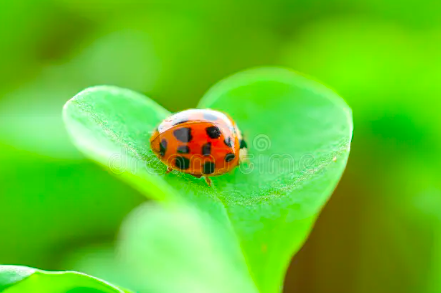
Ladybugs (for Aphids)
| Product | Hippodamia convergens |
|---|---|
| What it eats | Aphids (adults and larvae) |
| Application rate | 5-10 per m² |
| Frequency | As needed |
| Conditions | 18-30°C |
| Note | May fly away in open systems |
Rove Beetles (for Fungus Gnats)
| Product | Dalotia coriaria |
|---|---|
| What it eats | Fungus gnat larvae, thrips pupae |
| Application rate | 5-10 per m² |
| Frequency | One-time establishment |
| Conditions | 18-30°C |
| Effectiveness | Excellent for potting media |
Parasitic Wasps (for Aphids, Whiteflies)
| Product | Aphidius colemani (aphids) / Encarsia formosa (whiteflies) |
|---|---|
| What it eats | Lays eggs inside pests — larvae eat from inside |
| Application rate | 2-5 per m² weekly |
| Frequency | Every 1-2 weeks |
| Conditions | 18-25°C |
| Note | Very effective, invisible to humans |
Part 6: Biological Control Application Guide
When to Release
| Timing | Strategy |
|---|---|
| Preventative | Release low rates before pests appear |
| Curative | Release high rates immediately after detection |
| Maintenance | Release low rates every 2-4 weeks |
How to Release
Step 1: Receive beneficial insects (usually shipped overnight)
Step 2: Store at correct temperature (see product instructions)
Step 3: Release within 24 hours of receipt
Step 4: Distribute evenly across affected area
Step 5: Release near pest hotspots
Step 6: Monitor effectiveness weekly
Compatibility Notes
| Don’t use with biological controls | Why |
|---|---|
| Broad-spectrum pesticides | Kills beneficials |
| Sticky traps in same area | Traps beneficials too |
| High air velocity (fans) | Blows beneficials away |
| Low humidity (<50%) | Reduces predatory mite survival |
Part 7: Physical and Mechanical Controls
Sticky Traps
| Type | Attracts | Placement |
|---|---|---|
| Yellow | Aphids, whiteflies, fungus gnats | Just above canopy |
| Blue | Thrips | Canopy level |
Best practices:
- Replace weekly or when covered
- Count insects weekly to track trends
- Don’t place directly above plants (traps beneficials)
Vacuuming
For small infestations, a vacuum is highly effective:
- Use a small handheld vacuum
- Vacuum visible pests off leaves
- Empty vacuum into sealed bag and freeze
- Repeat daily until gone
Heat Treatment
Some pests die at specific temperatures:
| Pest | Lethal Temperature | Time |
|---|---|---|
| Spider mites | 45°C (113°F) | 30 minutes |
| Aphids | 40°C (104°F) | 1 hour |
| Thrips | 45°C (113°F) | 30 minutes |
Note: Most crops can’t tolerate these temperatures. Heat treatment is for empty spaces between crops.
Pressure Washing
For empty growing systems between cycles:
- High-pressure water removes pest eggs and larvae
- Use after harvest, before next planting
- Follow with sanitizer
Part 8: Soft Controls — Low-Impact Options
Insecticidal Soap
| Aspect | Information |
|---|---|
| What it is | Potassium salts of fatty acids |
| How it works | Disrupts cell membranes, dehydrates pests |
| Safe for | Humans, plants (when used correctly) |
| Kills | Aphids, spider mites, whiteflies (on contact) |
| Application | Spray undersides of leaves |
| Frequency | Every 3-5 days until pests gone |
| Caution | Test on small area first — some plants sensitive |
Neem Oil
| Aspect | Information |
|---|---|
| What it is | Cold-pressed oil from neem tree seeds |
| How it works | Disrupts feeding, reproduction, and growth |
| Safe for | Humans, plants, beneficials (when dry) |
| Kills | Aphids, spider mites, whiteflies, fungus gnats |
| Application | Dilute with water and mild soap |
| Frequency | Every 5-7 days |
| Caution | Can burn leaves in hot conditions |
Diatomaceous Earth (DE)
| Aspect | Information |
|---|---|
| What it is | Fossilized algae powder |
| How it works | Abrasive particles cut pest exoskeletons |
| Safe for | Humans (food grade), plants |
| Kills | Crawling insects (not flying) |
| Application | Light dusting on growing medium surface |
| Caution | Ineffective when wet; wear mask when applying |
Essential Oils
| Oil | Effective Against | Application |
|---|---|---|
| Peppermint | Aphids, spider mites | 5-10 drops per liter of water |
| Rosemary | Spider mites | 10 drops per liter |
| Thyme | Fungus gnats | 5 drops per liter |
Caution: Essential oils can burn plants at high concentrations. Test first.
Part 9: Crop-Specific Pest Risks
Leafy Greens (Lettuce, Kale, Spinach)
| Pest | Risk Level | Primary Control |
|---|---|---|
| Aphids | High | Lacewings, ladybugs |
| Thrips | Medium | Blue sticky traps, predatory mites |
| Whiteflies | Low (but possible) | Parasitic wasps |
Herbs (Basil, Cilantro, Mint)
| Pest | Risk Level | Primary Control |
|---|---|---|
| Spider mites | Very high | Predatory mites |
| Aphids | High | Lacewings, ladybugs |
| Fungus gnats | Medium | Rove beetles |
Fruiting Crops (Tomatoes, Peppers)
| Pest | Risk Level | Primary Control |
|---|---|---|
| Whiteflies | Very high | Encarsia formosa |
| Spider mites | High | Predatory mites |
| Thrips | High (virus vector) | Predatory mites, blue traps |
| Aphids | Medium | Parasitic wasps |
Microgreens
| Pest | Risk Level | Primary Control |
|---|---|---|
| Fungus gnats | High (short cycle) | Prevention, sanitation |
| Aphids | Medium | Inspect seeds |
Note: Microgreens grow too fast for biological controls to establish. Prevention is critical.
Part 10: Between-Crop Sanitation
The period between harvest and replanting is your best opportunity to eliminate pests.
Step-by-Step Between-Crop Protocol
| Step | Action | Why |
|---|---|---|
| 1 | Remove all plant material | Eliminates pest habitat |
| 2 | Vacuum all surfaces | Removes loose pests and eggs |
| 3 | Pressure wash channels | Dislodges stuck material |
| 4 | Apply sanitizer (hydrogen peroxide or commercial product) | Kills remaining pathogens and pest eggs |
| 5 | Let system dry completely | Many pests need moisture |
| 6 | Inspect before replanting | Verify clean |
| 7 | Release preventative beneficials | Establish protection before new crop |
Empty Room Treatment Options
| Method | How | When |
|---|---|---|
| Heat | Raise room temp to 45°C for 2 hours | Between cycles |
| UV light | Run UV-C lamps for 24 hours | Empty room only |
| Ozone | Run ozone generator (ventilate after) | Empty room only |
Part 11: Integrated Pest Management Action Plan
Weekly IPM Checklist
| Day | Task |
|---|---|
| Monday | Check and replace sticky traps |
| Tuesday | Count traps — record data |
| Wednesday | Visual inspection (10-20 plants) |
| Thursday | Check under leaves with magnifier |
| Friday | Apply biological controls if needed |
| Weekend | Sanitation — remove dead leaves |
Action Threshold Decision Tree
text复制下载
Pest detected?
    ↓
NO → Continue monitoring weekly
    ↓
YES → Identify pest
    ↓
    ↓
Below action threshold?
    ↓
YES → Increase monitoring (check twice weekly)
    ↓
NO → Immediate action required
    ↓
    ↓
Choose control method:
- Small area? → Physical removal (vacuum, prune)
- Widespread? → Biological controls
- Between cycles? → Deep clean, heat treatment
When to Call for Help
| Situation | Action |
|---|---|
| Can’t identify pest | Take clear photo, consult online forum or extension service |
| Pest spreading despite controls | Increase biological control frequency |
| Crop loss occurring | Remove affected plants immediately |
| New pest not in this guide | Consult commercial biological control supplier |
Part 12: Common IPM Mistakes
Mistake 1: Waiting Too Long
Problem: “I’ll deal with it next week” → pests reproduce exponentially.
Solution: Act immediately when you see pests. Daily inspection is your best tool.
Mistake 2: Using Pesticides with Biological Controls
Problem: You release beneficial insects, then spray something that kills them.
Solution: If you use biological controls, avoid all pesticides — even “organic” ones can harm beneficials.
Mistake 3: Inconsistent Monitoring
Problem: You check once a month and miss early infestations.
Solution: Set a recurring calendar reminder for weekly scouting.
Mistake 4: Ignoring Sanitation
Problem: Dead leaves and algae create pest habitat.
Solution: Clean daily. Remove dead plant material immediately.
Mistake 5: One Control Method Only
Problem: Using only sticky traps or only predatory mites.
Solution: IPM works because it’s layered. Use prevention + monitoring + biological controls together.
Part 13: Emergency Response Protocol
If You Find a Major Infestation
| Step | Action | Timeframe |
|---|---|---|
| 1 | Isolate affected zone | Within 1 hour |
| 2 | Remove heavily infested plants | Within 1 hour |
| 3 | Vacuum visible pests | Within 2 hours |
| 4 | Release high-rate biological controls | Within 24 hours |
| 5 | Increase monitoring to daily | Until resolved |
| 6 | Review prevention protocols | After resolution |
When to Cull (Remove Entire Crop)
| Situation | Decision |
|---|---|
| >30% of plants infested | Consider culling |
| Viral infection confirmed | Cull immediately |
| Pest resistant to controls | Cull, deep clean, restart |
| Crop near harvest | Harvest early if possible, then cull |
Part 14: Quick Reference Cards
Pest Identification Card
| Pest | Visual ID | First Sign |
|---|---|---|
| Aphids | Small, pear-shaped, clusters | Sticky leaves |
| Spider mites | Tiny, webbing | Stippled leaves |
| Fungus gnats | Small flies on medium | Flies when watered |
| Thrips | Tiny, fast, silver streaks | Silvery leaves |
| Whiteflies | Tiny white moths | Cloud when touched |
Biological Controls Quick Card
| Pest | Beneficial | Application |
|---|---|---|
| Aphids | Lacewings, ladybugs | 5-10 per m² |
| Spider mites | Predatory mites (P. persimilis) | 10-25 per m² |
| Fungus gnats | Rove beetles | 5-10 per m² |
| Thrips | Predatory mites (A. cucumeris) | 50-100 per m² |
| Whiteflies | Parasitic wasps (E. formosa) | 2-5 per m² weekly |
Weekly IPM Quick Card
| Task | Time |
|---|---|
| □ Check sticky traps | Monday |
| □ Count pests | Tuesday |
| □ Visual inspection | Wednesday |
| □ Under-leaf check | Thursday |
| □ Release beneficials | Friday |
| □ Sanitation | Daily |
Summary: The IPM Mindset
- Prevention is 90% of pest control — Design, sanitation, and protocols matter most
- Monitor weekly, act immediately — Catch problems when they’re small
- Identify before acting — Different pests need different controls
- Layer your defenses — Prevention + monitoring + biological controls together
- Avoid pesticides entirely — They harm your biological controls and your brand
- Learn from every outbreak — Review what went wrong and improve protocols
Next Steps
Ready to implement IPM in your vertical farm?
- Read our Daily Operations Checklist for sanitation protocols
- Read our Nutrient Management Guide for plant health (healthy plants resist pests)
- Contact us for biological control supplier recommendations