
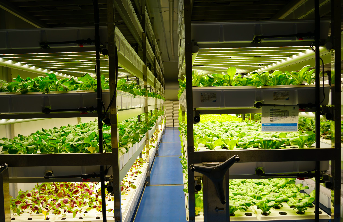
From Seed to Harvest: Complete Growth Cycle Management
A practical guide to managing every stage of plant development in your vertical farm
Introduction: Why Growth Stage Management Matters
In vertical farming, every day counts. Understanding what your plants need at each stage — from germination to harvest — can be the difference between a mediocre yield and an exceptional one.
This guide walks you through the four key stages:
- Germination (Days 1-5)
- Seedling (Days 6-12)
- Transplanting (Day 13)
- Vegetative / Maturation (Days 14-25+)
Each stage has specific requirements for light, nutrients, temperature, and humidity. Follow this roadmap to maximize your harvest.
Part 1: Germination (Days 1-5)
The germination stage is when your seed wakes up and sends out its first root (radicle) and shoot.
What’s Happening Inside the Seed
| Process | Description |
|---|---|
| Imbibition | Seed absorbs water, swelling and cracking the seed coat |
| Enzyme activation | Stored food (starch, proteins) breaks down into energy |
| Radicle emergence | First root pushes out |
| Shoot emergence | First stem pushes up toward light |
Optimal Conditions for Germination
| Parameter | Recommendation | Why |
|---|---|---|
| Temperature | 22-25°C (72-77°F) | Warmth speeds up enzyme activity |
| Humidity | 80-95% | Prevents seed from drying out |
| Light | None or very low (5-10 µmol/m²/s) | Most seeds germinate in darkness |
| Growing medium | Rockwool, peat pellets, or sponge plugs | Holds moisture while allowing air flow |
| Water | pH 5.5-6.0, EC 0.5-0.8 mS/cm | Low nutrient concentration |
Step-by-Step Germination Process
Day 1: Prepare Growing Medium
- Soak rockwool cubes in pH-adjusted water (pH 5.5-6.0) for 1 hour
- Gently shake out excess water (medium should be moist, not dripping)
- Place cubes in seedling tray with humidity dome
Day 1: Sow Seeds
- Drop 1-2 seeds per cube (depending on seed size)
- Cover with a thin layer of vermiculite or close the cube hole
- Mist lightly with water
- Cover with humidity dome to maintain 85-95% humidity
Days 2-5: Monitor and Wait
- Check moisture daily — medium should stay damp
- Remove humidity dome briefly each day for fresh air
- Look for first signs of root emergence (typically day 3-4)
Common Germination Problems
| Problem | Cause | Solution |
|---|---|---|
| No germination after 7 days | Temperature too low or seeds too old | Increase temperature to 24-25°C, use fresh seeds |
| Mold on cubes | Too wet, poor air circulation | Reduce watering, increase airflow |
| Seeds rot before sprouting | Overwatering, dirty equipment | Use sterile medium, clean trays |
Part 2: Seedling Stage (Days 6-12)
Once the seed sprouts and the first true leaves appear, your plant is in the seedling stage.
What’s Happening
- First cotyledons (seed leaves) provide initial energy
- True leaves (first real leaves) begin photosynthesis
- Root system develops rapidly
- Plant becomes less dependent on seed reserves
Optimal Conditions for Seedlings
| Parameter | Recommendation | Notes |
|---|---|---|
| Temperature | 20-22°C (68-72°F) | Slightly cooler than germination |
| Humidity | 65-75% | Lower than germination to prevent disease |
| Light PPFD | 100-200 µmol/m²/s | Start low, increase gradually |
| Photoperiod | 16-18 hours | Long days promote growth |
| EC | 0.8-1.2 mS/cm | Low nutrient concentration |
| pH | 5.5-6.2 | Same as germination |
Daily Seedling Care
What to check each day:
| Task | Frequency | What to Look For |
|---|---|---|
| Check moisture | Daily | Medium should be moist, not wet |
| Measure EC/pH | Daily | Keep EC below 1.2 for seedlings |
| Inspect roots | Every 2 days | White roots = healthy; brown = problem |
| Rotate trays | Daily | Prevents leaning toward light |
| Remove humidity dome | Day 5-7 | Gradually expose to lower humidity |
Signs of Healthy vs. Unhealthy Seedlings
| Healthy Signs | Warning Signs |
|---|---|
| Bright green color | Yellow leaves (nutrient deficiency or overwatering) |
| Sturdy, upright stem | Leggy, stretching stem (too little light) |
| White, fuzzy roots | Brown, slimy roots (root rot) |
| Uniform growth | Uneven size (uneven light or water) |
Part 3: Transplanting (Day 13)
Transplanting is moving seedlings from the germination tray to your main vertical growing system.
When to Transplant
Your seedlings are ready when:
- 2-3 true leaves have developed (not counting cotyledons)
- Roots are visible at the bottom of the rockwool cube
- Seedling height is 3-5 cm (1-2 inches)
- Typically around day 12-14
Pre-Transplant Preparation
One day before transplanting:
- Prepare your main growing system (NFT channels, towers, or deep water culture)
- Run the system with plain water to test flow
- Adjust pH to 5.5-6.0
- Set EC to 1.2-1.5 mS/cm
On transplanting day:
- Gently remove seedlings from tray
- Inspect roots — white and healthy only
- Discard any weak or diseased seedlings
Step-by-Step Transplanting Process
Step 1: Place seedling into growing system
- Insert rockwool cube into net pot or grow channel hole
- Ensure cube sits firmly but not crushed
- Roots should touch or be near the water/nutrient film
Step 2: Check water flow
- For NFT: water should flow at 1-2 cm depth
- Roots should be in contact with nutrient solution
- Adjust flow rate if needed
Step 3: Set initial conditions
| Parameter | Setting |
|---|---|
| PPFD | 150-200 µmol/m²/s |
| Photoperiod | 16-18 hours |
| EC | 1.2-1.5 mS/cm |
| pH | 5.5-6.2 |
| Temperature | 20-22°C |
Step 4: Monitor for transplant shock
- Some wilting is normal for 24-48 hours
- If longer, check water flow and root contact
- Maintain high humidity (70-80%) for first 2 days
Part 4: Vegetative / Maturation Stage (Days 14-25+)
This is the growth phase where plants build biomass — leaves, stems, and roots.
What’s Happening
- Rapid leaf expansion
- Stem thickening
- Root system fills the growing channel
- Plant prepares for harvest
Optimal Conditions for Maturation
| Parameter | Leafy Greens | Herbs | Fruiting Crops |
|---|---|---|---|
| PPFD | 200-350 | 200-300 | 350-500 |
| Photoperiod | 16-18 hours | 16 hours | 14-16 hours |
| EC | 1.5-2.0 | 1.2-1.8 | 1.8-2.5 |
| pH | 5.8-6.2 | 5.5-6.0 | 5.8-6.5 |
| Temperature | 20-22°C | 20-24°C | 22-26°C |
| Humidity | 60-70% | 55-65% | 55-70% |
Daily Management During Maturation
Every day:
| Task | Action |
|---|---|
| Check EC/pH | Adjust as needed |
| Inspect water level | Top up if low |
| Check for pests | Look under leaves |
| Observe plant color | Yellow = problem |
Every 3-5 days:
| Task | Action |
|---|---|
| Prune dead leaves | Remove yellow or dead lower leaves |
| Check roots | White = healthy; brown = flush system |
| Adjust light height | Maintain 30-50 cm above canopy |
Every 7-10 days:
| Task | Action |
|---|---|
| Change nutrient solution | Completely replace reservoir |
| Clean system | Remove algae or debris |
| Calibrate sensors | EC and pH meters |
Growth Milestones by Crop Type
Leafy Greens (Lettuce, Kale, Spinach)
| Day | Milestone |
|---|---|
| 5 | Germination complete |
| 10 | First true leaves appear |
| 15 | Transplant |
| 20 | Rapid leaf expansion |
| 25-30 | Harvest ready |
Herbs (Basil, Cilantro, Mint)
| Day | Milestone |
|---|---|
| 5-7 | Germination |
| 12 | First true leaves |
| 15-18 | Transplant |
| 22 | First pruning (for bushier growth) |
| 30-35 | First harvest |
Fruiting Crops (Tomatoes, Peppers)
| Day | Milestone |
|---|---|
| 7-10 | Germination |
| 15-18 | Transplant |
| 25-30 | Vegetative growth |
| 40-50 | Flowering |
| 70-90 | First fruit harvest |
Part 5: Harvesting
Knowing exactly when to harvest maximizes both yield and quality.
Signs Your Crop is Ready
| Crop Type | Visual Signs | Days to Harvest |
|---|---|---|
| Lettuce | 10-15 cm tall, 5-8 leaves | 25-30 |
| Kale | 15-20 cm tall, 6-10 leaves | 28-35 |
| Basil | 10-15 cm tall, harvest before flowering | 30-35 |
| Pak choi | 12-18 cm tall | 25-30 |
| Spinach | 8-12 cm tall | 25-35 |
Harvest Methods
Whole Plant Harvest (Most Common)
- Cut at the base just above the growing medium
- Remove entire plant at once
- Best for lettuce, pak choi, single-harvest greens
Cut-and-Come-Again
- Harvest outer leaves only
- Leave the growing point intact
- Allows 2-3 harvests from same plant
- Best for kale, chard, some herbs
Post-Harvest Handling
| Step | Action |
|---|---|
| 1 | Rinse roots gently to remove nutrient residue |
| 2 | Shake off excess water (do not soak) |
| 3 | Pat dry or use salad spinner |
| 4 | Store in perforated bags or clamshells |
| 5 | Refrigerate at 4°C (40°F) immediately |
| 6 | Mist lightly if storing longer than 3 days |
Expected Yield per Square Meter
| Crop | Yield per m² per harvest | Harvests per year |
|---|---|---|
| Lettuce | 3-5 kg | 12-15 |
| Kale | 2-4 kg | 8-10 |
| Basil | 2-3 kg | 10-12 |
| Pak choi | 4-6 kg | 10-12 |
Part 6: Complete Growth Cycle Summary Table
| Stage | Days | PPFD | EC | pH | Temp | Humidity |
|---|---|---|---|---|---|---|
| Germination | 1-5 | 5-10 | 0.5-0.8 | 5.5-6.0 | 22-25°C | 80-95% |
| Seedling | 6-12 | 100-200 | 0.8-1.2 | 5.5-6.2 | 20-22°C | 65-75% |
| Transplant | Day 13 | 150-200 | 1.2-1.5 | 5.5-6.2 | 20-22°C | 70-80% |
| Maturation | 14-25+ | 200-400 | 1.5-2.0 | 5.8-6.2 | 20-24°C | 60-70% |
Common Problems Across All Stages
| Problem | Stage | Cause | Solution |
|---|---|---|---|
| Leggy seedlings | Seedling | Too little light | Increase PPFD to 150-200 |
| Root rot | Any | Overwatering, poor oxygen | Lower water level, add air stone |
| Yellow lower leaves | Maturation | Nitrogen deficiency | Increase EC to 1.8-2.0 |
| Slow growth | Any | Temperature too low | Raise to 22-25°C |
| Algae on medium | Germination | Light hitting wet surface | Cover cubes with light-blocking material |
| Wilting after transplant | Transplant | Transplant shock | Increase humidity to 80% for 2 days |
Summary: Your Growth Cycle Checklist
Before you start:
- Clean and sterilize all equipment
- Calibrate EC and pH meters
- Prepare nutrient solution
- Test system flow
Germination (Days 1-5):
- Maintain 22-25°C temperature
- Keep humidity at 80-95%
- Check moisture daily
Seedling (Days 6-12):
- Gradually increase light to 200 PPFD
- Lower humidity to 65-75%
- Monitor root color
Transplant (Day 13):
- Prepare main system
- Handle seedlings gently
- Watch for transplant shock
Maturation (Days 14-25+):
- Increase EC to 1.5-2.0
- Check EC/pH daily
- Change nutrient solution weekly
- Harvest at peak maturity
Next Steps
Ready to master your growth cycle?
- Read our Nutrient Management Guide for detailed EC/pH strategies
- Check our PPFD/DLI Complete Guide for light optimization
- Contact us for crop-specific growth protocols